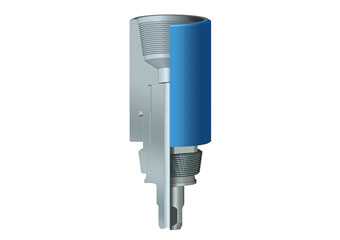
The main body of the downhole motor is the stator+rotor. They form the core functional unit for the downhole motor to convert hydraulic energy into mechanical energy. Their performance directly determines the torque, rotational speed and operational reliability of the entire downhole motor.
1. Structural features: The stator is the fixed component of the underground motor. The entire structure is a composite structure with an alloy steel shell and an elastic rubber bushing tightly fitted (or bonded) inside. The inner wall of the rubber bushing is processed into a helical cavity with a specific lead and number of heads. Rubber materials need to be adapted to different drilling conditions. Common ones include nitrile rubber (NBR, suitable for conventional conditions), hydrogenated nitrile rubber (HNBR, suitable for corrosive conditions containing hydrogen sulfide), and fluorine rubber (FKM, suitable for high-temperature and high-pressure conditions).
2. Core function: In coordination with the rotor, it forms multiple independent and movable sealed chambers, providing space for the flow of drilling fluid and the conversion of pressure energy. At the same time, relying on the elastic compensation of rubber, the sealing performance of the sealed chamber is guaranteed to prevent energy loss caused by drilling fluid leakage.
1. Structural features: The rotor is the moving part of the underground motor, a screw made of alloy steel. Its surface is usually coated with hard chromium, nickel-based alloy or tungsten carbide to enhance wear resistance and corrosion resistance. The number of helical heads is one less than that of the stator (for example, if the stator has 5 helical heads, the rotor has 4), and the leads of the two are the same. This design of "stator head number = rotor head number + 1" is the key to achieving power output.
2. Core function: When high-pressure drilling fluid flows from the upper end of the motor into the sealed chamber, the pressure difference inside the chamber will drive the rotor to perform eccentric planetary motion along the stator helix, converting the hydraulic energy of the drilling fluid into the mechanical rotational power of the rotor, which is then transmitted to the drive shaft and the drill bit through the universal joint.
1. The helical line types of the two must be strictly matched, and the lead error should be controlled within 0.05mm; otherwise, it will lead to leakage in the sealed chamber and a significant drop in power transmission efficiency.
2. The interference fit between the rubber bushing and the rotor needs to be adjusted according to the drilling conditions. If the interference fit is too small, it is prone to leakage; if it is too large, it will increase the starting torque and may even cause premature wear of the rubber bushing.
In addition, the aging of the rubber bushing of the stator and the peeling of the coating on the surface of the rotor are common failure forms of the core body of the underground motor, which will directly cause insufficient power output or complete failure of the screw drill tool. Therefore, the material selection and processing accuracy are the key technical points in the manufacturing of underground motors.
0531-69959201
lqg18653457231
+86-18653457231
No 12111,Jingshi Road, Lixia District, Jinan City, Shandong Province. P.R. China


Professional customer service team, professional after-sale services create a comprehensive high-quality, advanced technology, reliable products, which gives you a strong sense of security.
Professionals, professional skills and precision oil and gas equipment insure that we can provide you with professional product customization service.
The best quality products, strict quality control system and good reputations established Saigao product's irreplaceable place.
Superb technical team with continuous technological innovation, closely follow the market's trend help you to create the highest performance products.


 English
  日本語
日本語  français
  Español
  русский
  português
  العربية
  tiếng việt
  ไทย
ไทย  Polska
  română