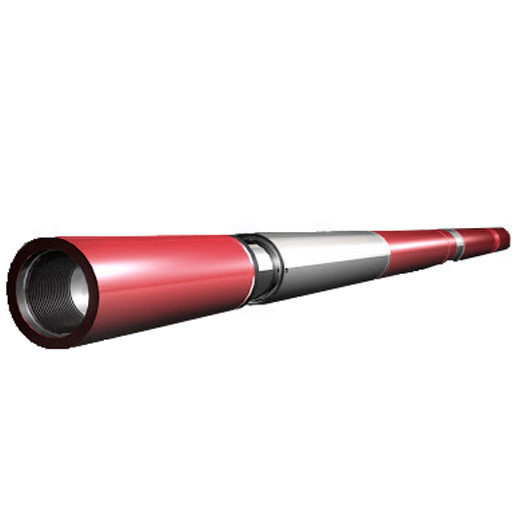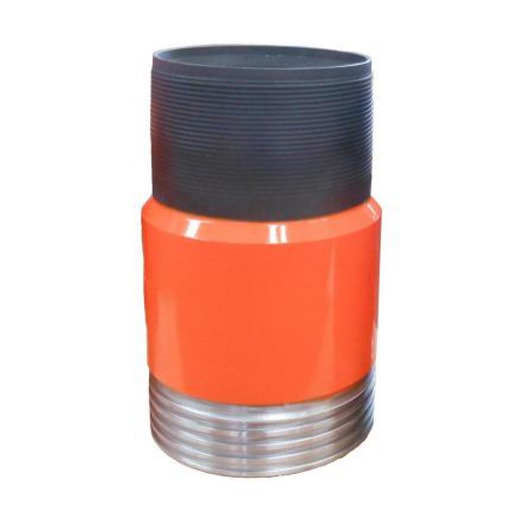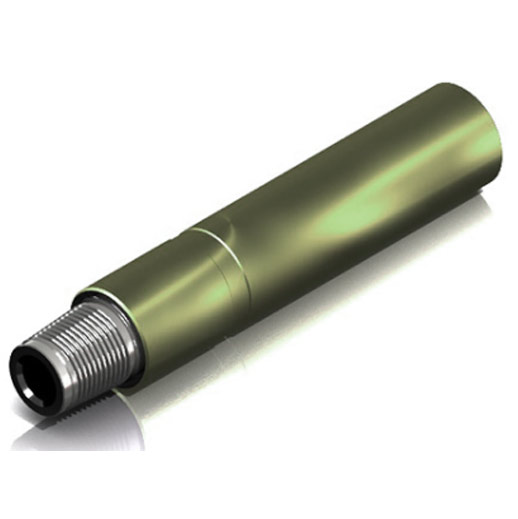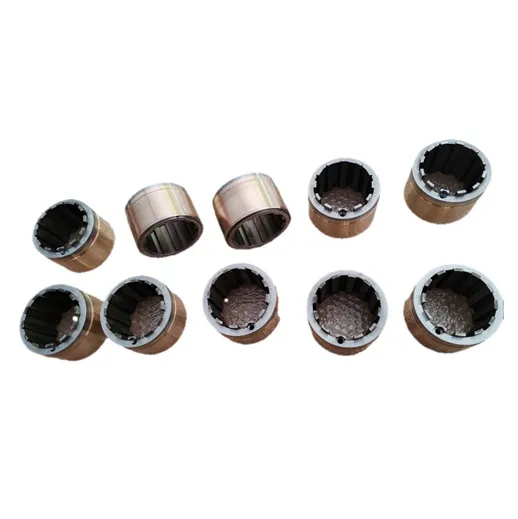
The valve in a drilling jar is a core component controlling the hydraulic or fluid circuit and regulating the shock rhythm and force. Different types of drilling jars use different valve assemblies. Hydraulic and hydromechanical shock absorbers have more representative valve structures.
This valve is mostly used in fully hydraulic drilling shock absorbers and is a key component for regulating the rhythm of shock energy release. It typically consists of a front valve body, a middle valve body, and a rear valve body. The middle valve body is fixed to the front and rear valve bodies on both sides. The first internal chamber houses the control unit and the actuator, while the second chamber is sealed and fitted with the valve core. During operation, the control unit receives a command from the surface and drives the actuator to rotate the valve core, thereby changing the flow rate of mud. This design allows for precise control of the damping magnitude through surface adjustments when the tubing is stuck, enabling the shock absorber's release force to adapt to different stuck drill bit scenarios and improving the success rate of unsticking.
Primarily used for pressure delay control in hydraulic shock absorbers, addressing the problem of uneven delay under different shock forces. Its valve body is cylindrical with a perforated inner hole. The valve body has mounting holes for throttling components, inside which a modulus tube and valve needle are sequentially installed. A filter element and plug are located at the top, and the bottom connects to a drain hole. The modulus tube is made of a high-elasticity modulus material, which prevents delay fluctuations caused by high-pressure deformation of the valve body. The gap between the valve needle and the modulus tube forms a drain channel, and the filter element filters impurities to prevent blockage. During operation, the drain through this gap creates stable pressure, ensuring the shock absorber maintains a reasonable delay under both high and low impact forces, avoiding excessive delays at low impact forces that increase drilling costs.
Commonly found in mechanical-hydraulic composite shock absorbers, is the control node for hydraulic power transmission. It is responsible for stably outputting external hydraulic pressure to the shock connecting pipe, which then transmits the hydraulic pressure to the lower components. Meanwhile, the shock-connecting pipe connects to the pressure relief chamber through a side hole. The oil pressure output valve, in conjunction with the balance spring structure of the pressure relief chamber, alleviates the backflow pressure generated by the rapid backflow of oil pressure during shock, achieving hydraulic system balance and preventing damage to the internal components of the shocker from high-pressure impacts.
This is a classic valve assembly structure in traditional hydraulic shockers for achieving pressure-locking shocks. The valve needle engages with the valve hole on the valve body, and the annular gap between them serves as a flow channel. The gap restricts flow, creating pressure lock-in, thus achieving a shock delay effect. However, this structure has significant drawbacks: the annular gap is extremely small, easily clogged by impurities, and cannot self-clean; after clogging, disassembly, cleaning, and reassembly are required. Furthermore, the cleanliness requirements for processing and assembly are extremely high, making shock delay adjustment difficult and subsequent maintenance cumbersome.
Designed specifically for ultra-deep well hydraulic shockers, suitable for the harsh environment of high temperature and high pressure downhole. The valve body is cylindrical and fitted between the upper spindle and the pressure body. Its end face has evenly distributed blind holes, each containing a spring and a support column. The spring abuts against the support column and the bottom of the blind hole, respectively, and corresponds to the retaining ring inside the pressure body. This structure transforms the rigid contact between the valve body and the retaining ring into a flexible contact, reducing harmful vibrations and valve body wear caused by pressure buildup at high temperatures. It also solves problems such as uneven valve body stress and sealing failure caused by elevated oil temperatures in ultra-deep wells.
0531-69959201
lqg18653457231
+86-18653457231
No 12111,Jingshi Road, Lixia District, Jinan City, Shandong Province. P.R. China


Professional customer service team, professional after-sale services create a comprehensive high-quality, advanced technology, reliable products, which gives you a strong sense of security.
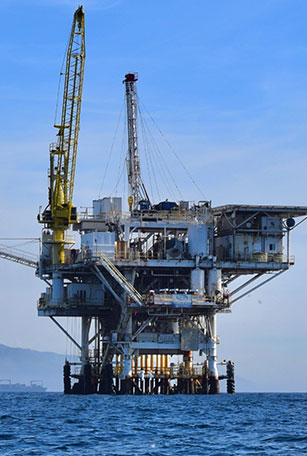
Professionals, professional skills and precision oil and gas equipment insure that we can provide you with professional product customization service.
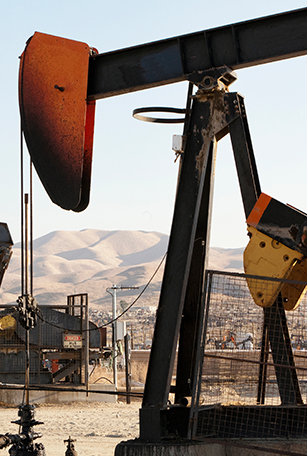
The best quality products, strict quality control system and good reputations established Saigao product's irreplaceable place.
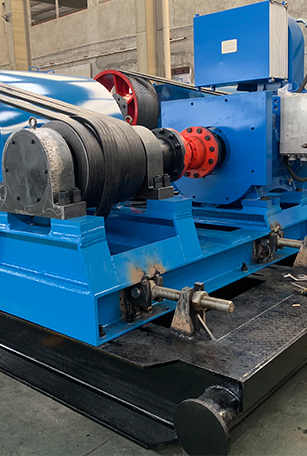
Superb technical team with continuous technological innovation, closely follow the market's trend help you to create the highest performance products.


 English
  日本語
日本語  français
  Español
  русский
  português
  العربية
  tiếng việt
  ไทย
ไทย  Polska
  română