Operating in high-pressure drilling environments requires equipment that can maintain stable fluid circulation, withstand continuous mechanical stress, and adapt to complex underground conditions. Among all drilling system components, the mud pump plays a vital role because it controls drilling fluid movement, pressure delivery, and cooling efficiency throughout the operation.
A high-performance mud pump must provide reliable pressure output, excellent structural strength, and consistent operating stability under demanding conditions. Understanding how pump design, operating requirements, and mud pump specification influence performance allows drilling operators to select equipment that supports safer and more efficient drilling processes.
Before choosing suitable equipment, professionals usually compare different types of mud pumps based on pressure capability, flow performance, durability, and application requirements. The ideal solution is not simply the pump with the highest pressure rating, but the one that delivers a balanced combination of pressure stability, circulation efficiency, and long-term reliability.
Modern drilling projects increasingly involve deeper wells, complex formations, and more challenging operating environments. These conditions place higher demands on pressure management because drilling fluids must travel through extended well sections while maintaining sufficient force to remove cuttings, stabilize the borehole, and control formation pressure.
A mud pump used in high-pressure drilling must overcome friction losses within the drill string while maintaining consistent fluid circulation. Pressure instability may reduce drilling efficiency, affect hole cleaning performance, and increase stress on other drilling components.
Another challenge comes from variations in drilling fluid properties. Depending on geological conditions, drilling fluids may contain different concentrations of solids, weighting materials, and chemical additives. These changes influence viscosity, density, and flow resistance, requiring pumps that can adapt to different operating conditions.
For this reason, evaluating a detailed mud pump specification is essential before equipment selection. Parameters such as pressure rating, displacement capacity, power requirements, and component strength directly determine whether a pump can perform reliably in high-pressure drilling environments.
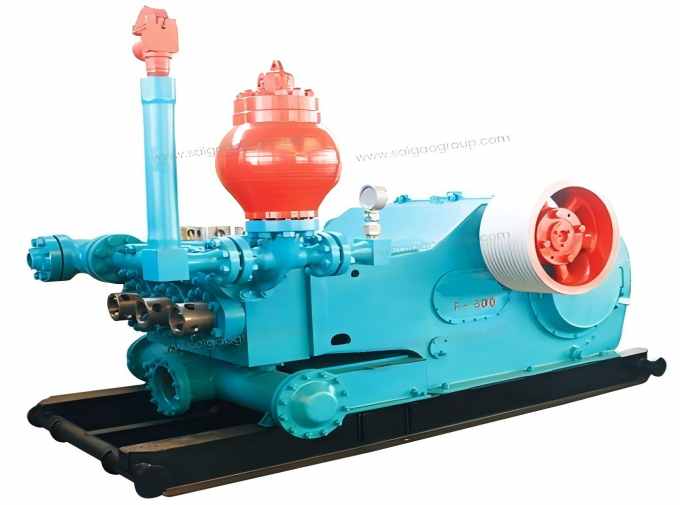
The performance of a high-pressure mud pump depends on multiple technical factors. A complete mud pump specification provides important information about whether the equipment can satisfy specific drilling requirements.
Working pressure is one of the most important factors because it determines the maximum force the pump can deliver during operation. A pump with insufficient pressure capability may struggle to maintain effective circulation in deep wells or when handling high-density drilling fluids.
Flow capacity is equally important. High-pressure drilling does not only require strong pressure output but also sufficient fluid volume to transport rock cuttings efficiently. A properly designed pump balances pressure and flow to improve drilling performance while controlling energy consumption.
Durability also influences long-term reliability. Components including liners, pistons, valves, and fluid-end assemblies experience repeated pressure cycles and abrasive conditions. High-quality construction helps reduce wear and extend service intervals.
| Specification Factor | Impact on Performance | Importance in High-Pressure Drilling |
|---|---|---|
| Working Pressure | Determines maximum pressure delivery capability | Supports effective circulation in deep and challenging wells |
| Flow Capacity | Controls drilling fluid circulation volume | Improves cuttings removal and drilling efficiency |
| Power Rating | Defines available operating energy | Maintains stable performance under heavy loads |
| Fluid-End Design | Affects wear resistance and service life | Reduces maintenance frequency in abrasive conditions |
| Pressure Stability | Controls pressure fluctuation during operation | Improves safety and protects drilling equipment |
Because drilling projects vary significantly in pressure requirements, fluid conditions, and operating environments, selecting the right equipment configuration is essential. Reviewing Saigao Group’s available drilling equipment solutions can help operators better understand different product options and identify suitable equipment characteristics for their specific applications.
Drilling fluids are constantly affected by changing geological conditions, temperature variations, and operational requirements. These factors can significantly influence fluid viscosity, density, and resistance during circulation.
A suitable mud pump must maintain stable performance even when drilling fluid characteristics change. Different types of mud pumps provide different advantages depending on fluid conditions, required pressure levels, and operational environments.
For example, drilling fluids with higher viscosity require stronger pumping capability, while fluids containing abrasive particles require components with improved wear resistance. Selecting a pump that matches actual fluid conditions helps reduce equipment stress and improves overall drilling efficiency.
High-pressure drilling creates significant mechanical and hydraulic loads, making pump design a critical factor in operational reliability. A suitable mud pump requires a strong structure capable of handling repeated pressure cycles without excessive wear or performance decline.
Modern high-pressure mud pumps typically use reinforced power-end structures, durable fluid-end components, and optimized sealing systems. These design features help maintain stable operation while reducing the risk of component failure.
Valve design and internal fluid pathways also influence pump efficiency. Improved fluid movement reduces pressure loss and vibration, allowing the pump to operate more smoothly under demanding conditions.
Maintenance accessibility is another important design consideration. Since high-pressure drilling equipment operates continuously under heavy loads, convenient inspection and replacement of wear parts can significantly reduce downtime.
High pressure alone does not determine mud pump performance. In practical drilling applications, operators need a balanced system that combines pressure output, circulation efficiency, energy usage, and durability.
Excessive pressure without proper circulation management may increase equipment wear and operating costs. However, insufficient pressure can lead to poor cuttings removal and reduced drilling effectiveness. The most suitable pump provides stable pressure while maintaining efficient fluid movement.
This is why reviewing detailed mud pump specification information is critical during equipment selection. Proper specifications allow operators to evaluate whether a pump can meet real drilling conditions rather than focusing only on maximum performance values.
Understanding different types of mud pumps helps drilling professionals select equipment based on specific operational requirements. Each design has unique advantages in pressure performance, maintenance needs, and application suitability.
| Mud Pump Type | Main Characteristics | High-Pressure Performance |
|---|---|---|
| Triplex Mud Pump | Uses three plungers to provide smooth pressure delivery | Commonly used for high-pressure drilling due to stable flow and reliability |
| Duplex Mud Pump | Uses two pistons with a simpler structure | Suitable for applications with moderate pressure requirements |
| Single-Acting Mud Pump | Provides fluid displacement in one operating direction | Used for specific circulation requirements |
| Double-Acting Mud Pump | Generates fluid movement during both piston directions | Provides continuous flow but requires more complex maintenance |
Among various types of mud pumps, triplex mud pumps are widely selected for high-pressure drilling because they provide smooth pressure output, efficient circulation, and dependable operating performance. However, the final selection should always consider drilling depth, fluid characteristics, pressure requirements, and expected operating conditions.
Selecting a suitable mud pump for high-pressure drilling requires more than choosing equipment with a high pressure rating. A reliable solution must combine pressure stability, efficient circulation, strong construction, and adaptability to changing drilling conditions.
By evaluating different types of mud pumps and reviewing detailed mud pump specification information, drilling operators can identify equipment that delivers better performance, longer service life, and improved operational reliability.
Saigao Group provides drilling equipment solutions designed for demanding industrial applications. Since every drilling operation has unique requirements regarding pressure levels, drilling fluids, and working conditions, professional communication before equipment selection can help avoid performance mismatches. Customers with specific application needs can reach out to Saigao Group through its technical consultation channel to discuss suitable mud pump solutions and related equipment considerations.
A mud pump circulates drilling fluid through the well system to remove cuttings, cool drilling tools, and maintain borehole stability.
Mud pump specification provides key information about pressure capacity, flow rate, power requirements, and durability, helping determine equipment suitability.
Triplex mud pumps are commonly used because they provide stable pressure output and efficient fluid circulation.
Fluid viscosity, density, and solid content influence pumping requirements, so the pump must match actual drilling fluid conditions.
Important factors include working pressure, flow capacity, durability, maintenance requirements, and operating efficiency.
No. Different mud pump types have different pressure capabilities and operating characteristics, so selection depends on specific drilling requirements.


 English
  日本語
日本語  français
  Español
  русский
  português
  العربية
  tiếng việt
  ไทย
ไทย  Polska
  română